Since this is a blood disease it will be usually treated by a Hematology Oncologist. The disease,PNH, is different from other hemolytic anemias because the cause is from an intrinsic defect. Intrinsic defect means that in the cell membrane (deficiency of glycophosphatidylinositol) leading to absence of protective proteins on the membrane.
Paroxysmal nocturnal hemoglobinuria (PNH) results from a mutation in a hematopoietic stem cell; the mutated cell then expands in the bone marrow. This mutation is usually acquired in adulthood, and the disorder is not inherited or passed down to children.
The disease causes the breakdown of circulating red cells (hemolysis), which can produce symptoms including red or darkened urine and a low red blood cell count (anemia). PNH patients can also develop aplastic anemia, which is accompanied by a decreased platelet and/or white blood count in addition to anemia. Conversely, patients with aplastic anemia sometimes develop PNH. Patients are also at increased risk of developing blood clots, which cause symptoms such as severe leg, abdominal, or chest pain, shortness of breath, jaundice, or headache.
Physicians diagnose PNH using one of two blood tests — either a Ham test or flow cytometry. Treatments for PNH patients with hemolytic anemia include transfusion, folic acid, and if appropriate, iron supplements. Low red blood cell, platelet, and white cell counts can be treated with steroids or with the same immunosuppressive drugs used to treat aplastic anemia. Blood clots are usually treated with anticoagulants, and sometimes, if severe, with tissue plasminogen activator (TPA). PNH can be cured by bone marrow transplantation; this procedure should be considered on an individual basis, based on the patient’s age and symptoms.
TESTING FOR DIAGNOSIS OF PNH
The disease causes the breakdown of circulating red cells (hemolysis), which can produce symptoms including red or darkened urine and a low red blood cell count (anemia). PNH patients can also develop aplastic anemia, which is accompanied by a decreased platelet and/or white blood count in addition to anemia. Conversely, patients with aplastic anemia sometimes develop PNH. Patients are also at increased risk of developing blood clots, which cause symptoms such as severe leg, abdominal, or chest pain, shortness of breath, jaundice, or headache.
Physicians diagnose PNH using one of two blood tests — either a Ham test or flow cytometry. Treatments for PNH patients with hemolytic anemia include transfusion, folic acid, and if appropriate, iron supplements. Low red blood cell, platelet, and white cell counts can be treated with steroids or with the same immunosuppressive drugs used to treat aplastic anemia. Blood clots are usually treated with anticoagulants, and sometimes, if severe, with tissue plasminogen activator (TPA). PNH can be cured by bone marrow transplantation; this procedure should be considered on an individual basis, based on the patient’s age and symptoms.
TESTING FOR DIAGNOSIS OF PNH
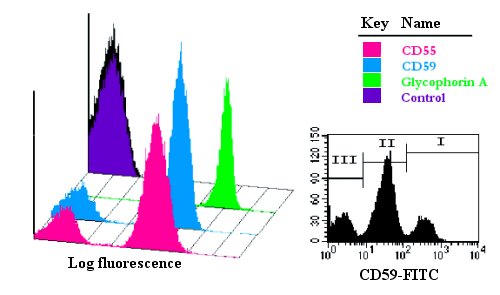
Flow cytometry detects PNH blood cells by using either monoclonal antibodies or FLAER (fluorescent aerolysin). Monoclonal antibodies attach to the GPI-anchored proteins (such as CD59) attached to the surface of red blood cells. FLAER attaches to the GPI anchors themselves. Sometimes it takes multiple tests to come to an accurate result. FLAER is becoming more and more popular because it is a highly sensitive test. It uses a fluorescenated bacterial protein that binds to the GPI anchor itself. Since it binds to the GPI anchor, it recognizes all proteins that are attached to the cell surface by this anchoring mechanism. Defective cells that are missing the GPI anchors and the protective proteins are characterized as PNH blood cells.
Also keep in mind that all commercial testing labs are different and each will have its own values for a positive PNH test.

Also keep in mind that all commercial testing labs are different and each will have its own values for a positive PNH test.
Other testing would be a bone marrow biopsy.

In a bone marrow analysis detection of the red cells will produce a defective protective layer. The white cell and platelets will be lower than normal . This result will decrease immunity in the body and therefore decrease resistance against disease.
The Ham Test is also used in the diagnosis of PNH.
HAM test is used to evaluate patients with suspected PNH (Paroxysmal Noctural Hemoglobinuria) or suspected congential dyserythropoietic anemia, especially with hemosiderinuria, Pancytopenia, decreased RBC acetyl cholinesterase, decreased leukocyte alkaline phosphatase, negative direct Coomb’s test, and/or apparent marrow failure.Patients red cells show a high sensitivity to complement mediated hemolysis .
LDH ( lactate dehydrgenase) is a blood test that is used to monitor tissue damage. The most important measure of hemolysis — can help provide a more complete clinical picture of PNH when performed in conjunction with other laboratory tests and patient-reported assessments. Monitoring of hemolysis in patients with PNH can be done by measuring LDH levels. LDH levels in PNH can be frequently elevated, in some cases exceeding 20 times the upper limit of normal during severe exacerbations.3 It is important to establish a baseline LDH level and continue monitoring over time. Static or “snapshot” measurements of LDH may not reflect the chronic and progressive course of the disease.

TREATMENT
Some of the supportive therapies that are currently being used to help ease the symptoms of PNH include transfusions and anticoagulants (Blood thinners)
Transfusions are recommended during times of severe haemoglobin depletion when your body cannot generate enough new cells to make up for those lost to haemolysis. It may be used on a periodic basis when your haemoglobin level is steadily decreasing.
Your physician may prescribe anticoagulants to you, in order to either reduce the risk of getting blood clots or may need to dissolve a clot when it happens.
Complement Inhibition:
When unregulated, the complement can lead to various severe diseases causing damages in multiple organs. Complement inhibitors are compounds which bind to enzymes in the complement system. Their role is to suppress or reduce the activity of complement.Bone Marrow Transplantation:
Bone marrow transplantation (BMT) is the only known treatment that may cure PNH. It involves replacing the body’s defective blood stem cells by new healthy ones from a donor. However, bone marrow transplantations carry significant risks which should be discussed with your doctor.It is important to remember that symptoms of PNH may vary from patient to patient, and a plan to manage your PNH may work for you but may not work for someone else. This is why it is so important to discuss treatment options with your doctor.

The following websites are helpful.
http://www.pnhsource.eu/Diagnosing%20PNH/Flow%20Cytometry/Default.aspxhttp://www.mskcc.org/cancer-care/adult/rare-hematologic-disorders/paroxysmal-nocturnal-hemoglobinuriahttp://www.medindia.net/bloodtest/hematology/pnh_test.htmhttp://pnhsource.eu/Treatment%20Options/Default.aspx


