Pancreatic cancer is the most deadly of all cancers. Early detection and new drug therapy is the key to aggressively destroy cancer cells in this vital organ in out bodies.
In the medical testing community there is no test that can detect early stages of pancreatic cancer and no cancer drug therapy that can completely destroy the cancer cells in the pancreas.
The Tuveson lab has developed mouse models of pancreatic ductal adenocarcinoma (PDAC) to discover biomarkers of early disease and to identify the pathways and druggable targets involved in the initiation, progression, and metastasis of PDA. Efforts are also underway to come up with efficacious therapeutic strategies.
“We have discovered that PDAC tumors contain a deficient and compressed vasculature that limits therapeutic delivery and therefore efficacy,” notes Dr. Tuveson. “Using these models we have uncovered several methods to correct or target these vascular deficits and promote response, and this information has led to the initiation of several clinical trials.
“At CSHL we will search for new vulnerabilities in PDAC neoplastic and microenvironmental cells, and evaluate these candidates in a futuristic 'Mouse Hospital' we are creating on campus.”
Sarcoma is cancer of the connective tissue such as muscle, cartilage, blood vessels, nerves and bones. Soft tissue (non-bone) sarcomas are rare, but they can occur in many parts of the body such as muscle or fat of the extremities or the trunk. They can also occur in the abdomen, pelvis or chest. There are many types of soft tissue sarcomas, but most are treated in the same way. Some common soft tissue sarcomas include fibrosarcoma, liposarcoma, malignant fibrous histiocytoma, rhabdomyosarcoma and synovial sarcoma.
CytRx Corporation a biopharmaceutical company specializing in oncology, today announced that favorable results from a Phase 1b/2 clinical trial with aldoxorubicin (formerly INNO-206) in patients with advanced soft tissue sarcoma will be featured in a poster and discussion presentation at the Connective Tissue Oncology Society (CTOS) 17th Annual Meeting on November 15 in Prague, Czech Republic.
The abstract, "Aldoxorubicin (INNO-206) is an active drug for the treatment of relapsed or refractory soft tissue sarcomas," will be presented by the clinical trial's principal investigator Dr. Sant Chawla, M.D., F.R.A.C.P. Dr. Chawla, a world renowned expert in the treatment of soft tissue sarcomas, is Director of the Sarcoma Oncology Center in Santa Monica, Calif. The Phase 1b/2 clinical trial results, first announced in early June 2012 at the American Society of Clinical Oncology (ASCO) conference, showed clinical benefit (defined as partial response and stable disease of more than four months following up to eight cycles of treatment) with aldoxorubicin at the maximum tolerated dose in 10 of 13 evaluable patients with advanced, metastatic soft tissue sarcomas who had either not responded or relapsed after receiving one to three prior chemotherapies. Eight of the 13 patients had been treated previously with doxorubicin.
"We are excited to share the powerful data from our aldoxorubicin clinical trial with experts from the international oncology community at this preeminent sarcoma conference, as well as at the upcoming ESMO 2012 Congress in Vienna, Austria," said Steven A. Kriegsman, CytRx President and CEO. "The results from this clinical trial are impressive, especially given that these patients had failed prior chemotherapy regimens. Further, there were no observed cardiac toxicities with aldoxorubicin in this clinical trial, with cardiac toxicity considered a major dose-limiting factor for standard doxorubicin. Again, we thank Dr. Chawla for his valuable time to present at these international conferences."
Lengthening the life of a patient with brain tumors is wonderful news. Phase 2 of the clinical trials paves the way for testing a new therapy that combines a brain cancer vaccine with the oncology drug, Avastin
A new report of this news was reported today by the University of California, San Francisco.
This vaccine is individualized by using tissue from the patient's tumor. This procedure has proven effective in a multicenter phase 2 clinical trial at extending their lives by
several months or longer. The patients suffered from recurrent
glioblastoma multiforme—which kills thousands of Americans every year.
These
results, to be announced Tuesday, April 17 at the American Association
of Neurological Surgeons (AANS) meeting in Miami, compared the
effectiveness of the vaccine for more than 40 patients treated at UCSF’s
Helen Diller Family Comprehensive Cancer Center, at the Seidman Cancer
Center at University Hospitals Case Medical Center in Cleveland and at
New York-Presbyterian Hospital/Columbia University Medical Center in New
York City.
The trial found the vaccine could extend survival for
the patients by several months when compared to 80 other patients who
were treated at the same hospitals and received standard therapy—47
weeks compared to 32 weeks. Several of the patients who received the
cancer vaccine have survived for more than a year.
“These results
are provocative,” said UCSF neurosurgeon Andrew Parsa, MD, PhD, who led
the research. “They suggest that doctors may be able to extend survival
even longer by combining the vaccine with other drugs that enhance this
immune response.”
The next step, he said, will be a more extensive, randomized clinical
trial to look at the effectiveness of the vaccine combined with the drug
Avastin, a standard therapy for this type of cancer, compared to the
effectiveness of Avastin alone. Those trials, to be run by the National
Cancer Institute, will begin enrolling patients later this year.
To read more of this article:
http://www.newswise.com/articles/brain-cancer-vaccine-proves-effective?ret=/articles/list&category=medicine&page=1&search%5Bstatus%5D=3&search%5Bsort%5D=date+desc&search%5Bsection%5D=10&search%5Bhas_multimedia%5D=
In selected hospital around the United States doctors are testing a new vaccine for brain cancer. The very first patient in Florida is beginning her clinical trial with this new vaccine.
41-year-old Cathy Hoffman-Booker of Weston is the first patient in
Florida to try a new vaccine for GBM or glioblastoma multiformae, the
most aggressive type of brain tumor.
She's enrolled in a clinical trial at the University of Miami Sylvester Comprehensive Cancer Center.
"The goal of the vaccine is to really spark her immune system to
recognize those tumor cells as foreign, and then fight those tumor cells
and keep them at bay, and hopefully keep them from coming back,"
explained neurosurgeon Dr. Ricardo Komotar.
Her MRI scan shows the tumor deep in the left frontal lobe.
It was completely removed, then the vaccine was used to try to keep it from returning.
"We took out her brain tumor, it was preserved, and then from her own
tumor we purified down what's called the heat shock protein, and then
that was readministered to her this past week," Komotar said.
That protein in high concentrations will hopefully activate and
program immune cells to specifically attack only the tumor cells.
Hoffman-Booker also had radiation and is still taking chemotherapy pills.
"She's doing great, no apparent side effects from the treatments
she's been having, so she's doing very well," said her husband of 11
years, Loren Booker. They have two children.
Jennifer Hoffman set up a website in November to inform family and
friends of her sister's condition. That's how they learned about the
vaccine study.
MRI shows tumor deeply embedded in the brain tissue.
"Thanks to the website someone at my nephew's school sent an article to me about the trial," Hoffman said.
There are only eight medical centers across the country involved in the Heat Shock Protein Vaccine (HSPPC-96) trial.
UM Sylvester is the only study site in Florida.
Only patients with an MRI or biopsy that confirms the tumor is a GBM,
and who have had no radiation or chemotherapy are eligible.
If they've already had surgery, only those who've had the tumor
partially removed can participate because the tumor is used to make the
vaccine.
Hoffman-Booker will get four weekly shots and then monthly vaccines.
She says her plan is to move forward.
"And be positive and hopeful that I'll see my children grow. So I'm not going to give up."
Dr. New expains the clinical trials of brain cancer vaccine.
For more information: http://www.wcsh6.com/news/article/191100/8/Doctors-testing-new-brain-cancer-treatment
Having worked with cancer patients I know the stages of grief that patients go through when hearing the diagnosis. There is unbelief, sadness, anger and sometimes rebellion in compliance with treatment. I am talking specifically now about CML patients. There is a great amount of hope for these patients now. Right now CML patients are required to take their Gleevac every day for a long life span. This may one day change because researchers are having many breakthroughs with molecular studies.
A great website for support and education is "The National CML Society". This site is full of information and direct help for your needs. Below is a video of testimonials of CML patients.
The hope for CML is great for there are great doctors who are adamant about continued clinical trials and research to continue to find a cure. You can help yourself and others by volunteering to participate in clinical trials and lab testing. Listen to the following video of one the most prominent hematology oncologists in America today.
Dr. Jorge Cortes
Be active in your treatment! Research and join online support groups. There is always hope!
Two reputable research and medical companies have joined together to develop molecular companion diagnostic intended to identify patients patients most likely to benefit from Bayer antibody-drug conjugate (ADC). Ventana,the other company, diagnostic immunohistochemistry platform aims to analyze the expression level of certain tumor targets serving as biomarkers in clinical trials for patient selection. This is why it is important to participate in clinical trials. Roche,another company, is committed to personalize healthcare in the field of oncology treatment.
At Ventana our mission is to improve the lives of all patients afflicted with cancer," said Mara G. Aspinall, President of Ventana Medical Systems, Inc. "We are pleased to be Bayer's partner of choice to facilitate the worldwide development of this ADC. As new biomarkers and diagnostic tests become increasingly available, they provide valuable information about potential positive recipients for these novel agents. Translating excellence in science into effective, targeted treatments for patients is at the core of Roche's scientific vision for 'Personalised Healthcare' (PHC), and it is our highest priority now and into the future."
"We are very excited to partner with Ventana to develop a companion diagnostic for one of our ADC projects," said Prof. Dr. Andreas Busch, Head of Global Drug Discovery and Member of the Executive Committee of Bayer HealthCare. "This constitutes another step for Bayer towards personalized medicine in cancer treatment as the selection of patients most likely to benefit from an ADC will increase the overall probability of therapeutic success for patients suffering from cancer."
About Antibody-drug conjugates (ADCs)Antibody conjugation to potent cytotoxic drugs is a promising way to increase efficacy and reduce systemic toxicity of drugs by targeting them selectively to tumor tissue. The antibody-drug conjugates (ADCs) are comprised of three distinctive features: an antibody, a cytotoxic drug (toxophore) and a linker, which give ADCs their characteristic properties. The monoclonal antibody is able to recognize surface proteins selectively over-expressed on cancer cells. This targeting ability allows the ADCs to deliver its cytotoxic payload, the toxophore, right into the tumor. Here, after internalization and release, the toxophore interferes with intracellular processes leading to the programmed death of the tumor cells. The linkers are designed to keep the toxic agent attached to the antibody until the target cancer cell is reached. The targeted nature of ADCs to specific tumor surface proteins or antigens make them good candidates for co-development with the VENTANA immunohistochemistry-based companion diagnostic assays that measure those antigens.
John Chabot, MD, chief, division of GI/Endocrine Surgery, executive director, Pancreas Center at New York-Presbyterian Hospital, Columbia University Medical Center, New York, NY, discusses the current chemotherapy options available to treat pancreatic cancer. The main drug available is gemcitabine
and is currently used in combination therapies.
There are currently trials underway that are demonstrating improved survival with aggressive chemotherapy. Nongemcitabine regiment was identified that proved to be a better treatment option for stage IV pancreatic cancer than gemcitabine. Chabot expects that drugs that are used in other types of cancer will show the most significant improvement in the future.
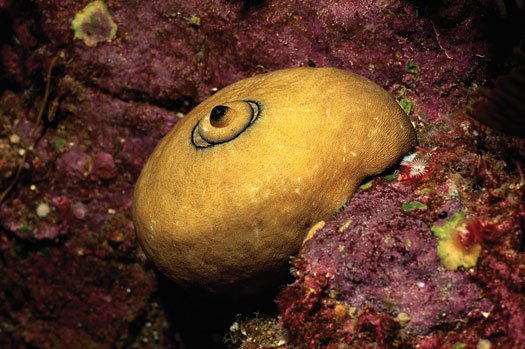
There is great research being done on a giant keyhole limpets hemolymph.that carries a protein that is essential component of the new cancer vaccine. What it the function of the keyhole limpets hemocyanin? It is to carry oxygen in their blood. The protein is unusually large in size, nearly the size of a virus. Keyhole limpet hemolymph contains epititopes. An epitope, also known as antigenic determinant, is the part of an antigen that is recognized by the immune system, specifically by antibodies, B cells, or T cells. The part of an antibody that recognizes the epitope is called a paratope. Although epitopes are usually thought to be derived from non-self proteins, sequences derived from the host that can be recognized are also classified as epitopes.
The epitopes of protein antigens are divided into two categories, conformational epitopes and linear epitopes, based on their structure and interaction with the paratope.[1] A conformational epitope is composed of discontinuous sections of the antigen's amino acid sequence. These epitopes interact with the paratope based on the 3-D surface features and shape or tertiary structure of the antigen. Most epitopes are conformational.
By contrast, linear epitopes interact with the paratope based on their primary structure. A linear epitope is formed by a continuous sequence of amino acids from the antigen.
The result of doctors injecting keyhole limpet hemolymph (KLH) is a poweful immune response. The immune system can be stimulated to attack a certain cancer by attaching markers to KLH. A real plus by using KLH is that it is nontoxic.
As you know before using a vaccine for cancer treatment clinical trials have to performed. A treatment for bladder cancer is now approved in Europe and Asia. You can read more in Popular Science article written by Sam Roudman on the December 2011 issue.